
Mould remediation · Kreis Heinsberg
Paint over mould and it comes back. Mould remediation in Kreis Heinsberg.
Understand the cause. Strip it back. Rebuild the surface.
What shows on the wall is the result of moisture in the structure behind it. We strip the affected build up back, expose the substrate and rebuild the surface properly. Where the cause belongs to another trade, we say so.
- Trading since
- 2012
- Working area
- Kreis Heinsberg and the surrounding area
- Work carried out
- Strip out, plaster, drywall, finish
01/ 10
Observation
Where mould shows up first
The spot where something shows is rarely the spot where it starts. Five areas come up again and again in homes. Pick one.
Areas in the building section
-
01 Room corner on an external wall
Visible Dark patches or a fine bloom in the upper corner where two external walls meet.
To be checked How cold that corner is compared with the wall beside it, what stands in front of it, and how the room is heated and aired.
-
02 Window reveal and sill
Visible Discoloured reveals, softened wallpaper edges, or water standing on the sill.
To be checked The junction between frame and reveal, the state of the seals, and whether condensation forms on the glass in the morning.
-
03 External wall behind furniture
Visible A patch that only appears once a wardrobe or sofa is pulled away from the wall.
To be checked How far the furniture stands from the wall, whether air can move behind it, and how the wall is built up.
-
04 Bathroom and shower area
Visible Darkened silicone joints, a bloom on the ceiling, or a line above the tiles.
To be checked How moisture leaves the room after a shower, the state of the joints and junctions, and the sealing in the splash zone.
-
05 Cellar and plinth zone
Visible Damp bands above floor level, plaster coming away, or pale salt deposits on the masonry.
To be checked The height at which the damp band stops, how the plinth and cellar wall are built up, and where water runs outside.
This overview is no substitute for looking at the building. What is actually going on in your home cannot be established from a distance.
02/ 10
Wall build up
What sits behind the surface you can see
Paint covers a surface. It changes nothing about what happens behind it. Move the probe through the wall build up and see what each layer actually does.
Room air
Room side
Warm room air carries moisture: cooking, showering, drying laundry, breathing.
When that air meets a surface noticeably colder than itself, it gives some of that moisture back at exactly that spot.
Drag the probe, or use the arrow keys.
All layers at a glance
-
Room air
Room side
Warm room air carries moisture: cooking, showering, drying laundry, breathing.
When that air meets a surface noticeably colder than itself, it gives some of that moisture back at exactly that spot.
-
approx. 0 to 3 mm
Finish
Paint, wallpaper or a decorative coat. This is the layer you can see.
A problem becomes visible here. It almost never begins here.
-
approx. 3 to 40 mm
Plaster and substrate
Filler, plaster build up and primer over the load bearing substrate.
If this build up is saturated or has come loose, it will not carry a new finish either.
-
from approx. 40 mm
Structure and cause
Masonry, junctions, joints and colder parts of the structure. This is where the real question sits.
As long as the moisture source stays here, the pattern on the surface comes back.
-
The work itself
Remediation build up
The affected build up is stripped out, the substrate exposed, prepared and rebuilt.
Plaster, drywall, paper and paint are precisely the trades that rebuild that layer.
The drawing is a simplification, not a building physics calculation. It shows why treating the surface does not reach a cause inside the structure.
Describe your situationA schematic wall section. Build up and layer thicknesses differ from building to building.
03/ 10
Possible causes
Where the moisture can come from
Six mechanisms turn up regularly in homes. Which one applies, and often more than one does, only becomes clear on site.
Typical signs
- A pattern that is clearer in winter than in summer
- Windows misted up in the morning
To establish on site
Where the coldest surfaces in the room are, and how the room is used, heated and aired.
Moist room air meets a surface colder than itself and releases water there.
Typical signs
- A sharply bounded pattern along an edge or corner
- Always the same spot, whatever the furniture is doing
To establish on site
The line that edge follows, how the wall is built at that exact point, and whether the surface beside it stays dry.
At corners, ceiling junctions, lintels and elements that run through the wall, the surface sits colder than the wall beside it.
Typical signs
- A pattern in the bathroom, the kitchen or the bedroom
- Rooms with no practical way to air them regularly
To establish on site
How the room is used, what ventilation exists, and whether moisture has a way out.
Cooking, showering and drying laundry put a lot of water into room air. If it is not carried away, it settles on the coldest surface.
Typical signs
- A pattern that keeps growing although nothing about the use has changed
- Damp in the floor build up or on the ceiling of the room below
To establish on site
Whether the source is still active. The pipework itself belongs to a plumbing firm.
A leaking pipe, a burst main or water getting in saturates the build up from the inside.
Typical signs
- A pattern with a level upper edge above the floor
- Plaster coming away and salt deposits
To establish on site
The height at which the damp band stops, how the plinth and cellar wall are built, and where water runs outside.
In older buildings, moisture from the ground can travel upwards through the masonry.
Typical signs
- A pattern that is clearer after rain or in certain weather
- Traces along an external edge or below a junction
To establish on site
The condition of that junction. Sealing, roofing and facade work belong to the relevant specialist firm.
Roof junctions, window junctions, the facade or failed sealing can let water into the structure.
This list is orientation, not a diagnosis. We do not assess a building without visiting it, and we do not diagnose remotely.
04/ 10
How it runs
From the first call to a finished surface
Five steps, in this order. Each one ends with something concrete, so you always know where things stand.
-
01
Assess
On the phone we talk about what you can see, how long it has been there and how the room is used. One or two photographs help a great deal.
Result An appointment on site, or a pointer to the trade that needs to come first.
-
02
Establish the cause
On site we look at the affected surface, what surrounds it and how the wall is built. Where it helps, and with your agreement, we open a small area.
Result A reasoned assessment of what is wetting the build up, and of what still needs establishing.
-
03
Define the work
We set out how far back the strip out goes, what gets rebuilt, and in what order the work runs.
Result A written quotation with a clearly bounded scope, including what it does not cover.
-
04
Strip out
The work area is sheeted off to keep dust down, the affected build up comes out, and the substrate is exposed and prepared.
Result A sound, dried out substrate that can be built back up.
-
05
Rebuild
Plaster, drywall, filler, paper and paint bring the surface back to the state of the rest of the room.
Result A finished surface that does not stand out from the walls next to it.
If step two shows that the cause sits outside our trades, we tell you and name the firm that needs to come first.
05/ 10
Scope of work
What we carry out, and what we do not
Farbenhaft24 is an interior finishing business. In mould remediation we take on the trade side: strip out, rebuild and finish. Anything beyond that is a different discipline, and we tell you when one of them is needed.
Work we carry out
-
01 Assessment on site
We look at the affected surface and judge what scope of trade work makes sense.
- Survey of the affected surfaces and what surrounds them
- Written quotation with a clearly bounded scope
-
02 Stripping out affected surfaces
Wallpaper, paint, loose plaster and saturated boarding come off until the substrate is exposed.
- Work area sheeted off to keep dust down
- Strip out down to a sound substrate
-
03 Drywall
Damaged boarding, linings and framing are replaced.
- Replacement of saturated boards and profiles
- New lining, filled and ready to sand
-
04 Plastering
Internal plaster and repairs bring the wall back to one continuous substrate.
- Repair and rebuilding of internal plaster
- Priming and filling as a base for the finish
-
05 Wallpapering
The wall is papered again to match the rest of the room.
- Removal of old coverings and paste residue
- New paper, cut in cleanly at edges and reveals
-
06 Painting and wall finishes
Last comes the finish that makes the room read as one space again.
- Painting in the colour you choose
- Matching in to the surfaces next to it
The basis is the set of trades this business has carried out since 2012: drywall, plastering, wallpapering, wall finishes and painting.
Services we do not offer
Not out of caution, but because they are a different discipline.
-
Expert reports and building surveys We do not produce expert reports or building physics calculations. Chartered surveyors do that.
-
Laboratory analysis and sampling We take no samples and identify no species. Accredited laboratories do that.
-
Air and spore measurements We carry out no indoor air measurements and interpret no limit values.
-
Sealing, roofing and pipework Cellar tanking, roof work and work on water pipes are separate trades. We tell you when one of them needs to come first.
-
Health advice Questions about health belong to your doctor, not to a trade business.
06/ 10
Transparency
What happens when you get in touch
So you know what you are getting into when you call or write.
01 What happens if I call?
You describe what you can see. We ask a few questions about the room, how it is used and how long you have noticed it. Then we say whether a site visit makes sense, or whether another trade needs to come first.
02 What information helps most?
The room, roughly how large the affected area is, how long you have noticed it, and whether there has been a known water escape. A photograph often says more than a description.
03 What gets looked at on site?
The affected surface, the surfaces and rooms next to it, the junctions and the existing build up. Where it helps, and with your agreement, we open a small area rather than guess.
04 What happens after the assessment?
You get a written quotation with the scope of the work. It also states what is expressly not included, so nothing is left open afterwards.
05 What happens once I accept?
We agree dates, tell you which rooms will be restricted and for how long, and work through the steps in the order we discussed.
This helps in the first conversation
- The room and roughly how large the affected area is
- How long you have noticed the spot
- Whether there has been a known water escape
- How the room is used, heated and aired
- One or two photographs of the spot and its surroundings
07/ 10
Finished surfaces
Surfaces this business has produced
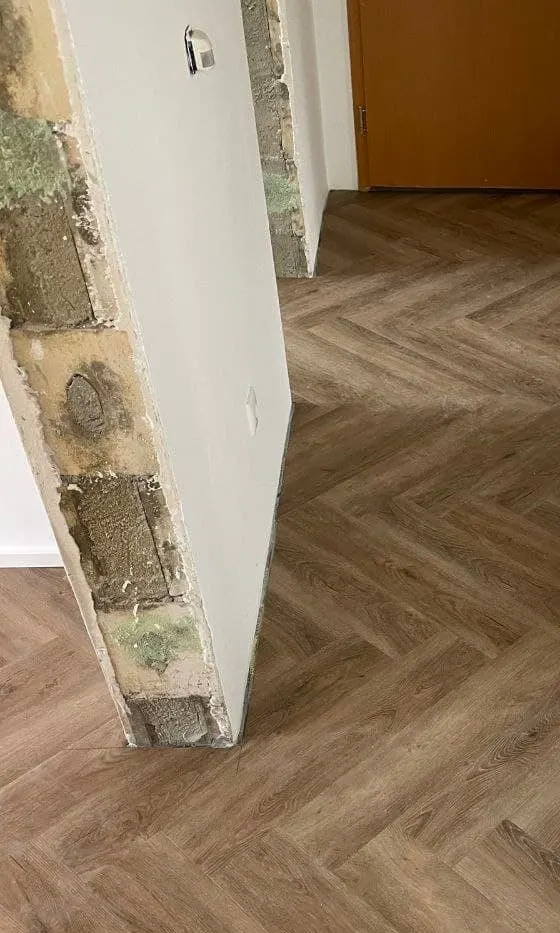
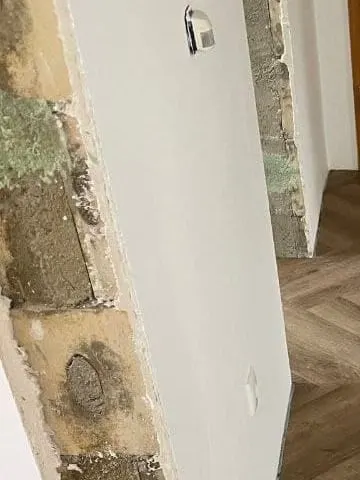
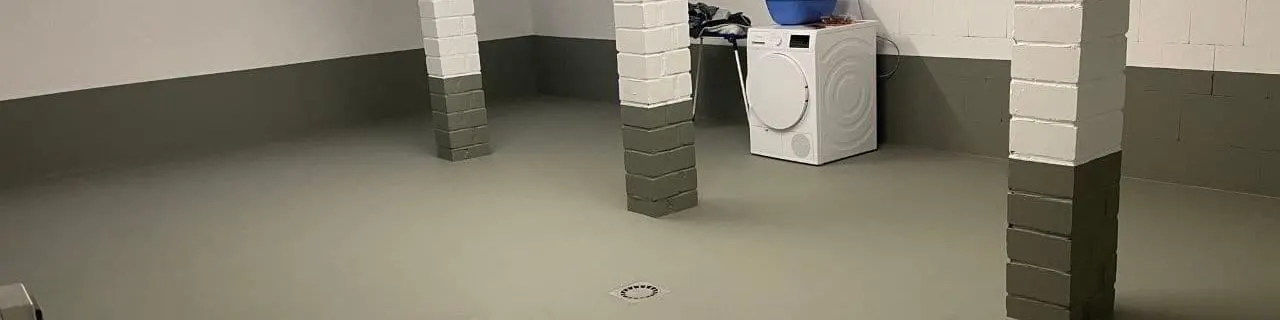
A remediation ends with a surface that gives nothing away. These photographs show wall and room surfaces from Farbenhaft24 projects.
These photographs show completed surface work. They are not photographs of mould damage and they are not a before and after pair. Only what was actually photographed is shown.
08/ 10
Who does the work
The business behind the work

We treat your home as if it were our own.
Farbenhaft24 Raumgestaltung is the business of Tobias Knopczyk, based in Hückelhoven. Since 2012 he has carried out drywall, plastering, wallpapering, painting and wall finishing work. In a mould remediation those are exactly the trades that follow the strip out: putting the surface back so that nothing shows.
Kreis Heinsberg and the surrounding area
The business sits in Hückelhoven and works across Kreis Heinsberg and the area around it. On remediation work short distances are more than a convenience: strip out, drying and rebuild are spread over time, and someone has to be able to look in on the surface in between.
Based in
Cäcilienweg 15, 41836 Hückelhoven
- Heinsberg
- Hückelhoven
- Erkelenz
- Geilenkirchen
- Wassenberg
- Wegberg
- Übach-Palenberg
- Gangelt
- Selfkant
- Waldfeucht
The ten municipalities of Kreis Heinsberg. Whether a job can be taken on depends on its scope and timing, not on distance alone.
09/ 10
Questions
Frequently asked questions
Five questions that come up in almost every first conversation.
Can I not simply paint over the spot?
Paint covers the surface but changes nothing about the moisture in the structure below. If the moisture source stays, the pattern returns in the same place. That is why the affected build up is stripped out and rebuilt rather than covered over.
Can you tell me the cause over the phone?
No. On the phone we can narrow down which mechanisms are plausible and whether a site visit makes sense. What is actually happening in your building only becomes clear once someone has seen the surface and what surrounds it.
Do I need an expert report first?
Not in every case. Where the pattern is clearly bounded and the mechanism is recognisable, the scope of trade work can be set directly. If the cause stays unclear, keeps recurring, or a dispute with a landlord or an insurer is in the air, a chartered surveyor is the right first step. We will tell you plainly which of the two applies.
How long will the room be out of use?
That depends on the scope, above all on how much is stripped out and how long the substrate needs to dry. We give you the timeframe before we start and say when each step falls, rather than promising a number upfront that nobody can know yet.
Do you work for landlords and property managers?
Yes. The process is the same: site visit, written quotation with a bounded scope, execution. Assessing the legal position of a tenancy is not something we do.
10/ 10
Contact
Request mould remediation
Describe what you can see in your own words. Everything else we work out in conversation.
Phone
0157 86747861Address
Farbenhaft24 Raumgestaltung
Cäcilienweg 15, 41836 Hückelhoven
Working area
Kreis Heinsberg and the surrounding area
There are no fixed office hours. If nobody picks up we are on a site, and we call back.